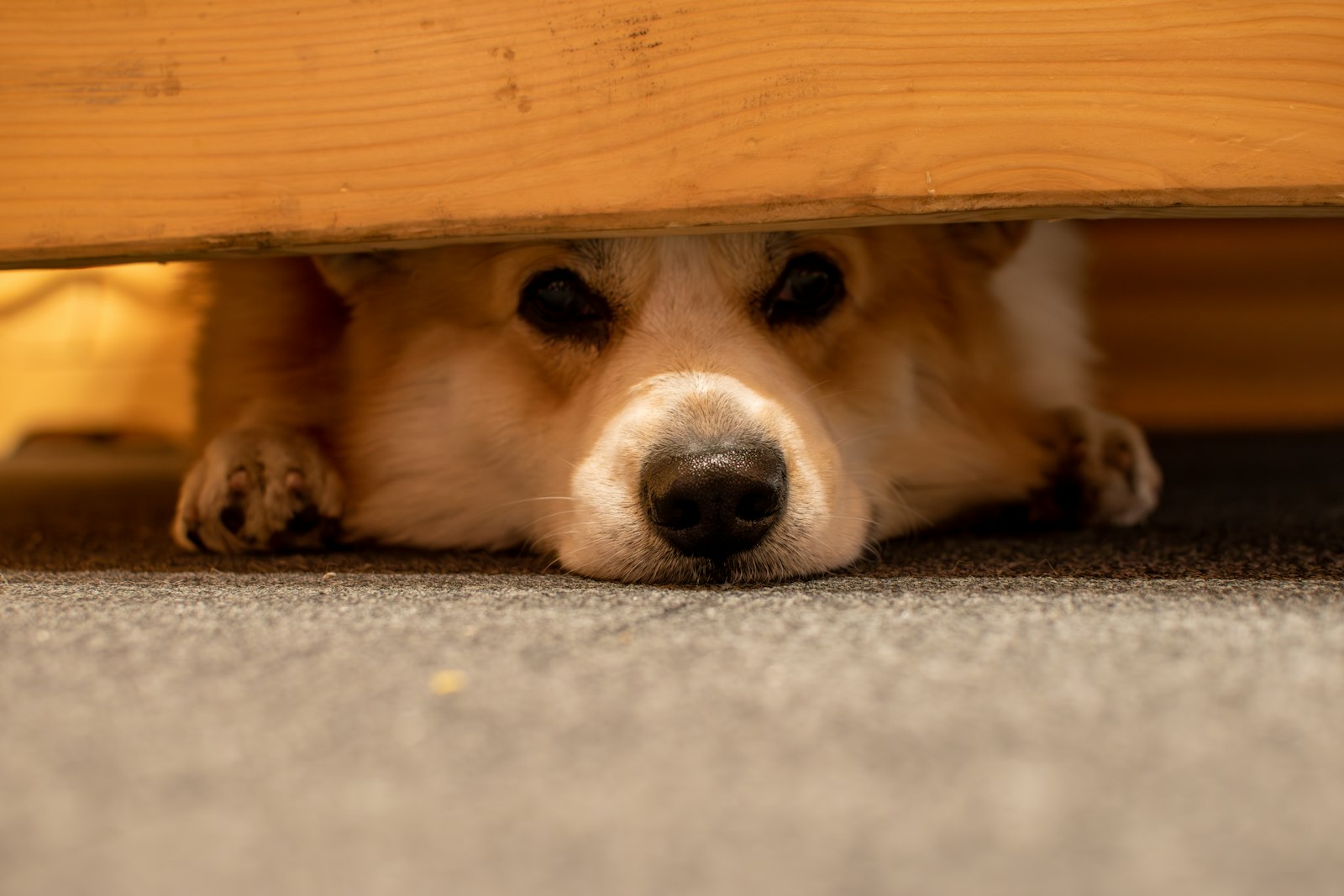

Reactivity is an intense reaction, usually barking, lunging, or growling, that comes from fear or frustration, not aggression. Most reactive dogs are trying to create distance from something that scares them or trying to reach something they're overly excited about, and neither situation is solved by punishment. Luigi and Alison have handled reactive dogs daily for years through their work with Save the Satos and Eleventh Hour Rescue, and the fix almost always starts with distance and patience, not correction.
People hear the word "reactive" and picture an aggressive dog. That's usually wrong, and it's one of the biggest misunderstandings we run into with new clients. Reactivity is common, especially in rescue dogs, and it's manageable. Luigi and Alison have walked reactive dogs nearly every day for years, first through their hands-on work with Save the Satos in Puerto Rico and Eleventh Hour Rescue here in New Jersey, and now as the backbone of how our whole team approaches walking.
Here's what reactivity actually is, what we do about it, and when it's time to bring in more specialized help.
What reactivity actually means
A reactive dog overreacts to something in their environment. That could be another dog, a bike, a skateboard, a person in a hat, a delivery truck. The reaction usually looks like barking, lunging, growling, or a dog that suddenly can't focus on anything else.
There are two broad categories, and they look similar but come from different places:
Fear-based reactivity. The dog is scared and trying to increase distance from the trigger. This is the more common type we see in rescue dogs, especially ones with unknown histories or limited early socialization. The behavior is defensive, not offensive.
Frustration-based reactivity. The dog actually wants to get to the trigger, often another dog, and the leash is preventing it. This shows up a lot in social dogs who simply haven't learned how to greet calmly, and the frustration of being held back boils over into noise and lunging.
Neither one means the dog is aggressive or dangerous. It means the dog's emotional response has outpaced their ability to think clearly in that moment.
Threshold distance: the concept that changes everything
The single most useful idea in working with a reactive dog is threshold distance, the distance at which a dog can notice a trigger without going over the edge into full reaction. Too close, and the dog is barking and lunging. Far enough away, and the same dog can watch a trigger walk by calmly.
Our job on a walk is to manage that distance. That might mean crossing the street when we see another dog coming, pausing behind a parked car, or turning down a side street. It's not avoidance for its own sake. It's giving the dog a chance to succeed instead of setting them up to fail.
Over time, with enough calm repetitions at a safe distance, that threshold distance gets shorter. A dog who used to react at fifty feet might handle twenty feet calmly after months of consistent, patient work.
Engage, then disengage
A technique we use constantly is what's often called engage/disengage. The dog notices the trigger (engage), and instead of letting the moment build into a reaction, we mark that calm noticing with a word or a treat, then guide their attention back to us (disengage). Done consistently, the dog starts to learn that noticing a trigger is followed by something good, not something scary or frustrating.
This only works within threshold distance. Try it too close to the trigger and the dog is already over the edge, past the point where treats or calm cues can reach them.
Why choke collars and corrections make it worse
We get asked about this a lot, usually by well-meaning owners who were told a choke chain or a hard leash correction would "snap the dog out of it." With a fear-based reactive dog, a correction confirms the fear. The scary thing appeared, and then something painful happened right after it. That's the opposite of what you want the dog to learn.
With frustration-based reactivity, corrections can add a layer of stress on top of a dog who's already worked up, which tends to make the behavior louder and more frequent, not less.
We use flat collars or well-fitted harnesses, distance management, and positive reinforcement. It's slower than a quick correction, but it actually changes the dog's underlying emotional response instead of just suppressing the outward behavior for a moment.
What this looks like on an average Tuesday
Most of our reactive dog walks are quiet and uneventful, which is the whole point. We know which dogs need extra space from other dogs, which ones startle at bikes, and which routes to avoid during school pickup when the sidewalks get crowded. This planning happens before the leash even goes on.
Isabella, Jon, Jessica, and Corinne are all trained in these techniques, so a client's reactive dog gets the same thoughtful handling no matter who's walking that day.
When we bring in Meredith
The vast majority of reactivity we see day to day, fear of strangers, barking at other dogs, pulling toward squirrels with single-minded focus, is well within what Luigi, Alison, and the team handle as a normal part of the job. But every so often, a case comes through that needs a deeper behavioral plan: a dog with a bite history, severe generalized fear, or trauma that goes beyond what daily walking and management can resolve.
That's when we bring in Meredith Kiani, our Weekend Manager and ADB Certified Canine Behavior Counselor. Meredith is also a NJ Certified Animal Control Officer, and she's the person Luigi and Alison turn to for the cases that need more than consistent walking and threshold work. Having her as part of the team means we can recognize when a dog needs that extra layer of support and get them to it quickly, instead of guessing our way through something outside our depth.
What this means for you
If you've got a reactive dog, you're not dealing with a bad dog or a broken dog. You're dealing with a dog who needs thoughtful handling, and that's something we do every single day. We're fully insured and bonded, CPR and First Aid Certified, and backed by 155+ Five-Star Google Reviews from clients across Morris County, plenty of whom came to us specifically because their dog needed more than a casual walk around the block.
Ready to book? Call (908) 340-0078 or visit pupsandrecreation.com for a free meet-and-greet.
Pups and Recreation is a family-owned dog walking and pet sitting business headquartered in Wharton, NJ. Serving Morris County since 2022.