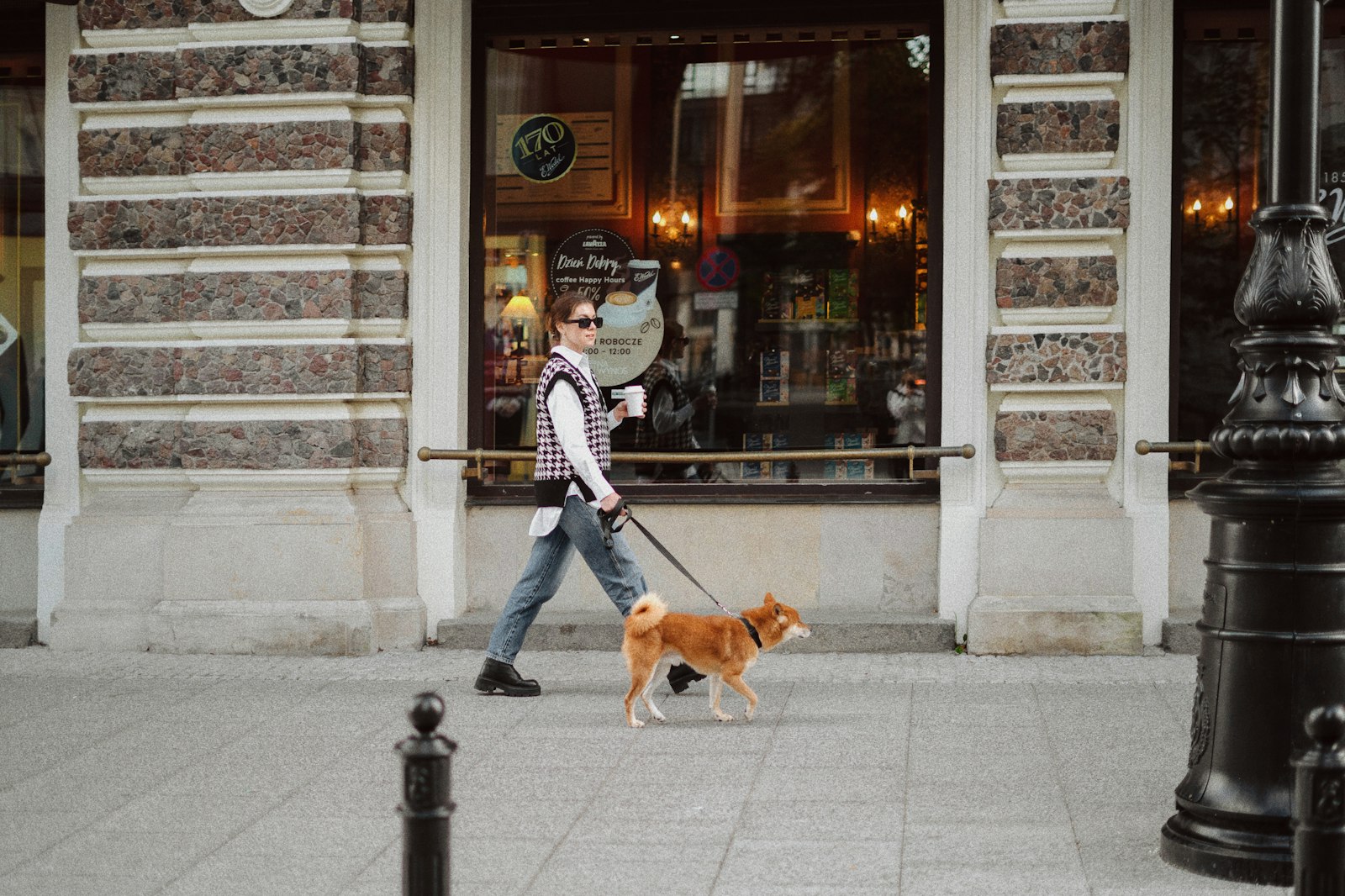
Most vets recommend waiting until your puppy has had their second or third round of vaccinations, usually around 14 to 16 weeks old, before walking them in public spaces where other dogs frequent. That said, socialization needs to start earlier through safe, controlled exposure. Talk to your vet about your specific puppy and area, then use a well-fitted harness and short, positive sessions to get started.
Luigi and Alison have brought a lot of puppies through their first walk, both their own dogs and the litters and young rescues that come through their work with Save the Satos and Eleventh Hour Rescue. It's one of their favorite parts of this business, and also one of the most misunderstood. New puppy owners tend to either wait too long out of caution or push too hard too soon. Here's the checklist we walk our own clients through.
Step 1: Talk to your vet about vaccine timing
This is the one we won't guess on for you. Puppies typically get a series of vaccinations between 6 and 16 weeks, and full protection against parvo and distemper generally isn't in place until after the second or third round, often around 14 to 16 weeks. Ask your vet specifically when your puppy is cleared for walks in public areas where unfamiliar dogs have been, versus your own yard or a trusted friend's fenced space.
Every puppy and every vet's protocol is a little different, so this isn't a step to skip or guess your way through.
Step 2: Don't wait on socialization, just be smart about it
Here's the tension new owners run into. The prime socialization window for puppies is roughly 3 to 14 weeks old, which often overlaps with the period before they're fully vaccinated. The solution isn't to wait until 16 weeks to start any exposure. It's to control the exposure.
Carry your puppy through a busy area instead of letting their paws touch the ground. Invite calm, vaccinated adult dogs over to your yard. Let your puppy watch the world from your arms or a stroller before they're cleared to walk through it themselves. This is exactly the kind of low-risk exposure Luigi and Alison built into their rescue puppy work, letting puppies see, hear, and smell the world safely before their feet ever hit a public sidewalk.
Step 3: Get the harness right before day one
A poorly fitted harness is one of the most common mistakes we see. Too loose, and a puppy can back out of it and bolt. Too tight, and it rubs and creates a negative association with the whole idea of walking.
Here's what to check:
- You should be able to fit two fingers, not more, not less, between the harness and your puppy's body at any point
- The chest strap shouldn't sit right at the armpit where it can rub with movement
- Buy a harness sized for growth, or expect to size up within a few months
- Let your puppy wear the harness inside the house for short stretches before the first real walk, so it's already familiar
Step 4: Understand leash pressure before you leave the driveway
Puppies don't naturally understand that pulling against a leash doesn't work. The first few walks are about teaching leash pressure, not covering distance.
Start in your yard or driveway. Take a step, and if your puppy pulls, stop moving instead of pulling back. Wait for slack in the leash, even a second of it, then continue. This teaches a puppy that the leash loosening is what makes the walk continue, not fighting against it. Luigi and Alison teach this exact method to every rescue and puppy that comes through their hands, and it works just as well for a purebred puppy from a breeder as it does for a rescue mix from Puerto Rico.
Step 5: Keep the first real walks short and boring
Five to ten minutes is plenty for a first walk. The goal isn't distance or exercise. It's a calm, positive association with the leash, the harness, and the outside world. End the walk before your puppy gets overtired or overstimulated, not after.
A short walk that ends with a puppy still curious and engaged is a win. A long walk that ends with an exhausted, overwhelmed puppy teaches the wrong lesson.
Step 6: Watch for signs your puppy needs a break
Puppies can't always tell you when they're overwhelmed, but their body language will. Watch for:
- Sudden freezing or refusing to move forward
- Tail tucked low or ears pinned back
- Excessive sniffing in one spot as an avoidance behavior
- Trying to turn around and head home
If you see any of this, it's fine to pick your puppy up, sit down on a curb, or simply head home. There's no prize for pushing through a walk your puppy isn't ready for.
Step 7: Build a routine, not just a walk
Once your puppy is cleared and comfortable, consistency matters more than variety. Same time of day, similar route, familiar sounds and sights. Puppies build confidence through repetition before they're ready for new environments and unpredictable situations.
This is also where a professional walker can help, especially for households where someone is out of the house most of the day. A consistent walker, same person, same schedule, gives your puppy the routine they need to grow into a confident adult dog.
We're fully insured and bonded, CPR and First Aid Certified, and Luigi and Alison bring years of hands-on puppy and rescue experience from Save the Satos and Eleventh Hour Rescue to every walk. With 155+ Five-Star Google Reviews and a team that's been serving Morris County since 2022, we've walked more first-time puppies than we can count, and we're happy to help with yours.
Ready to book? Call (908) 340-0078 or visit pupsandrecreation.com for a free meet-and-greet.
Pups and Recreation is a family-owned dog walking and pet sitting business headquartered in Wharton, NJ. Serving Morris County since 2022.